
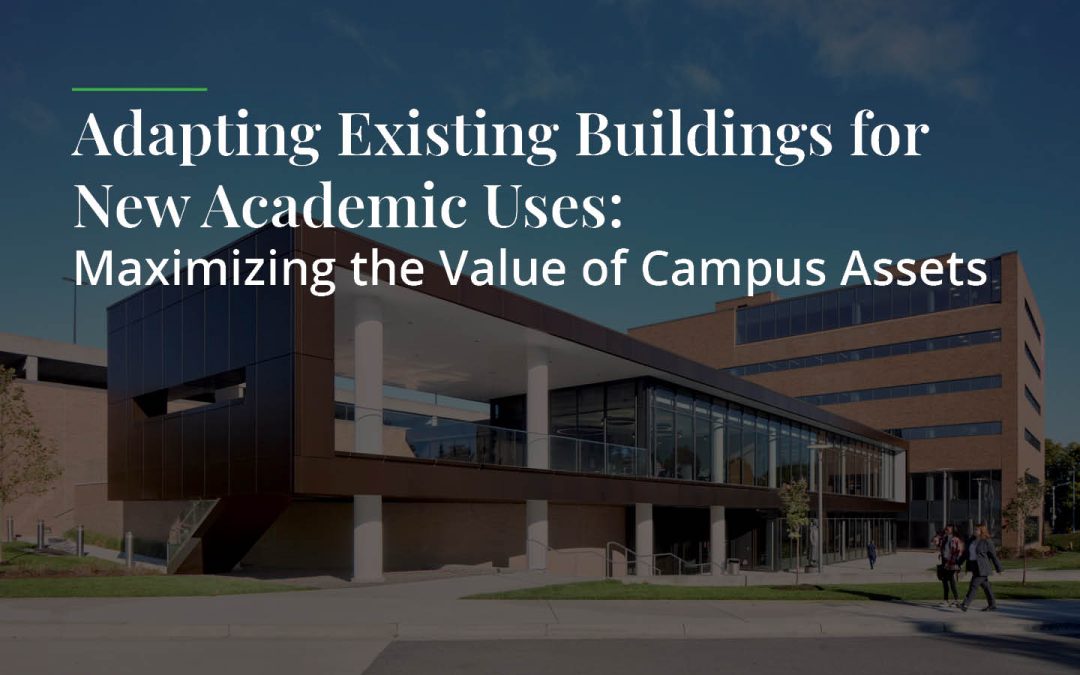
Adapting Existing Buildings for New Academic Uses
Higher education campuses are continually evolving. Academic programs change, technology advances, and student expectations continue to shift. At the same time, many colleges and universities face budget constraints and aging facilities. Rather than constructing new buildings, many institutions are finding value in adapting existing facilities for new academic uses. Renovating and repurposing existing buildings can help universities meet current needs while making the most of their existing assets. Whether converting a former administrative building into classrooms, transforming outdated laboratories into modern research space, or repositioning underutilized facilities for student services, adaptive reuse can provide practical solutions that support long-term campus goals.
Why Universities Are Repurposing Existing Buildings
Many campus buildings were designed decades ago for programs and teaching methods that look very different today. As enrollment trends, technology, and academic priorities change, institutions often discover that existing spaces no longer fully support their mission.
Repurposing existing buildings can offer several advantages:
- Potential lower overall project costs compared to new construction
- Reduced disruption to campus development plans
- Preservation of historic or architecturally significant facilities
- Preservation of embodied carbon.
- Faster project schedules in some cases
For many campuses, adapting an existing structure allows institutions to address immediate space needs while maintaining flexibility for future growth.
Evaluating An Existing Building’s Potential
Not every building is an ideal candidate for adaptive reuse. Before moving forward, institutions should evaluate several key factors.
Structural Capacity
One of the first questions is whether the existing structure can support new loads and occupancy requirements. Research equipment, library collections, laboratory infrastructure, vibration-sensitive environments, and modern mechanical systems can place demands on a building that differ significantly from its original design. A structural assessment can help identify limitations and determine whether modifications or reinforcement are needed.
Floor-to-Floor Heights
Modern academic uses often require larger mechanical systems, expanded technology infrastructure, and increased flexibility. Buildings with limited floor-to-floor height may present challenges when accommodating these systems.
Building Envelope Condition
The condition of exterior walls, roofing systems, windows, and waterproofing assemblies can have a major impact on project scope and budget. Addressing building envelope deficiencies early can help institutions avoid costly surprises during renovation.
Utility Infrastructure
Electrical capacity, HVAC systems, plumbing, and data networks may require upgrades to support contemporary academic environments. A thorough evaluation of existing systems can help project teams understand what structural infrastructure can remain and what must be replaced. Considering how new MEP systems could impact the existing building structure needs to be evaluated early in the assessment.
Challenges Of Academic Renovation Projects
While adaptive reuse can offer significant benefits, renovation projects often involve unique complexities.
Unknown Existing Conditions
Often, when dealing with older buildings, existing documentation is very limited or may not exist at all. Because of this, many older buildings contain hidden conditions that are not visible until construction begins. These conditions may include:
- Deteriorated structural elements
- Unrecorded modifications
- Obsolete building systems
- Water infiltration issues
- Hazardous materials
Early consultant involvement in investigations and detailed assessments can help reduce uncertainty and improve budget planning. A structural engineer who is familiar with older building materials and construction methods can provide valuable insight into existing structural systems and how they can perform.
Balancing History & Modern Functionality
Many universities have buildings that contribute to the institution’s identity and campus character. Renovation projects frequently require balancing preservation goals with modern performance expectations. This balance becomes particularly important when working with historic facilities or architecturally significant structures.
Planning for Future Flexibility
Academic needs will continue to evolve. Buildings that support today’s programs may require new uses in the future. When adapting existing facilities, universities can benefit from incorporating flexibility wherever practical. Designing with future modifications in mind can help reduce renovation costs and disruptions down the road.
Considerations may include:
- Flexible structural systems
- Adaptable classroom configurations
- Expandable infrastructure
- Future technology integration
- Opportunities for phased growth
Making the Most of Existing Campus Assets
As higher education institutions navigate changing enrollment patterns, evolving technology, and aging infrastructure, adapting existing buildings remains an effective strategy for meeting current needs while planning for the future.
A thoughtful evaluation of structural systems, building conditions, infrastructure, and long-term campus goals can help institutions determine whether adaptive reuse is the right solution. When approached strategically, existing buildings can continue serving new generations of students, faculty, and researchers while supporting responsible stewardship of campus resources.
When renovating and repurposing existing academic facilities, early understanding of a building’s condition can have a significant impact on project planning, budget development, and long-term performance. THP’s experience with existing structures, building envelope assessments, restoration, and structural engineering allows the design team to identify opportunities and constraints before they become costly surprises during construction. By evaluating structural systems, exterior enclosure conditions, and infrastructure requirements early in the process, the team can help owners make informed decisions about renovation feasibility, phasing strategies, and capital investments.
FAQ
What is adaptive reuse in higher education?
Adaptive reuse is the process of renovating or repurposing an existing building to serve a new academic function while retaining much of the original structure.
When is renovation a better option than new construction?
Renovation may be a practical option when an existing building has a sound structure, a favorable location, and the ability to support the institution’s long-term goals.
What factors should universities evaluate before repurposing a building?
Universities should evaluate structural capacity, building envelope condition, utility infrastructure, accessibility requirements, and future program needs.
What are the benefits of adapting existing academic buildings?
Benefits may include lower project costs, reduced environmental impact, preservation of campus character, and improved utilization of existing assets.
Can older campus buildings support modern laboratories?
Many existing buildings can be adapted for laboratory use, although structural modifications, utility upgrades, and vibration considerations may be required.
THP Limited is a structural and architectural engineering design firm providing structural engineering, building envelope, restoration and waterproofing, and parking consulting services nationwide. With offices in Cincinnati and Cleveland, Ohio, and Raleigh, North Carolina, our team operates as “One THP,” bringing people-centered solutions to clients and communities.